
Australian businesses are no longer asking whether they need digital tools. Most already have them. The real question now is whether those tools are helping the business work better, or whether they are quietly creating more work behind the scenes.
A company may have a website, email, spreadsheets, accounting software, cloud storage, a CRM, a booking tool and a few apps that were added over time. Each one may be useful on its own. The problem starts when those tools do not connect with the way the business actually operates.
That is where smarter digital operations become important. The goal is not to collect more platforms. The goal is to build a clearer operating system for the business, where websites, apps, workflows, data and people work together with less friction.
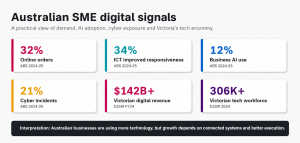
Figure 1. Australian SME digital signals from ABS and Victorian Government data.
Why connected digital systems matter now
The latest Australian Bureau of Statistics data shows that 32% of Australian businesses received orders online in 2024-25. The same release reported that 34% of businesses said ICT improved responsiveness to customer needs, while 12% reported using AI. At the same time, 21% of businesses experienced a cyber security incident during the year.
These numbers tell a practical story. Digital demand is real, AI adoption is rising, and cyber exposure cannot be ignored. For SMEs, this means the next phase of digital transformation cannot be only about launching a new website or adding another subscription. It has to be about building digital systems that are connected, tested and easier to manage.
More software is not the same as better operations
A business can buy another tool and still have the same operational problem. If data is copied by hand, if customer communication is scattered, if approvals depend on long email chains and if reports are prepared manually, adding one more tool may simply add one more place to check.
Connected digital systems take a different approach. They ask how work actually moves through the business. Where does a lead become a customer? Where does the customer become a project? Where do invoices, service updates, files, approvals and reports fit into the same journey? Once that journey is understood, technology can be designed around it.
| “The strongest digital systems are not the ones with the most features. They are the ones that remove friction from the work people already do every day.” |
Build, run and scale: what it means in practice
Build means creating digital solutions around a real business requirement, not around a generic feature list. Run means making sure the system works reliably in daily operations, with proper hosting, testing, user experience and support. Scale means improving the system over time so the business can grow without rebuilding everything from scratch.
For one company, that may mean a custom web platform that turns online enquiries into a structured workflow. For another, it may mean a mobile app for field staff. For another, it may mean improving the existing website and connecting it with CRM, reporting or service operations. The best solution depends on the workflow, not the trend.
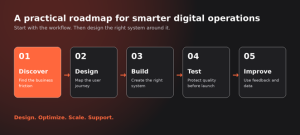
Figure 2. A practical process for moving from disconnected tools to cleaner digital operations.
Where WSIT AU fits
Workspace Infotech Australia PTY Limited positions itself as a full-service technology company supporting online business needs through software development, web development, mobile app development, graphic design, quality assurance and hosting. The company describes its work as more than lines of code, with a focus on digital experiences, trusted delivery and helping small businesses with technology needs as a partner or virtual team member.
That combination matters because modern business systems rarely succeed through development alone. They need discovery, design, engineering, testing, secure hosting and long-term improvement. A website should not sit separately from operations. A mobile app should support real users. A custom system should reduce manual work. QA should protect the customer experience before launch. Hosting should support reliability after launch.
A better way forward for Australian SMEs
The next competitive advantage for many Australian SMEs will not come from having the most tools. It will come from having the right tools connected in the right way. That means fewer manual handovers, fewer repeated entries, better visibility and more confidence in the data leaders use to make decisions.
Digital transformation does not need to start with a large, complicated rebuild. It can start with one workflow that matters. Map it, simplify it, design the right system around it, test it properly and improve it over time. Small improvements in daily operations often create the kind of business value that people actually feel.
Final thought
Technology should make a business easier to operate, not harder to manage. When websites, apps, data, workflows and support systems are connected properly, businesses can respond faster, serve customers better and scale with more control.
For Australian SMEs, the smarter way forward is clear: build with purpose, run with discipline and scale with systems that actually fit the business.
| Ready to build smarter digital operations? Visit https://workspaceit.com.au/ and talk to WSIT AU about your next website, software or mobile app project. |